
9H-HHC: What It Is, How Strong It Is, and the Law
|
|
Time: 13 min


Product Finder
Find Your Nine Realms Match
Answer 5 quick questions to find your perfect cannabinoid product.
How familiar are you with cannabinoid products?
What kind of product are you looking for?
Where and how do you usually use cannabis?
What kind of effect are you looking for?
When should it kick in, and how long should it last?

Welcome to
Nine Realms
Our store is intended exclusively for people 18 years of age or older. Please confirm your age to continue.
By clicking here, you agree to our Terms and Conditions and Privacy Policy.
|
|
Time: 13 min
9H-HHC turned up in German shops within weeks of the December 2025 ban on 10-OH-HHC, marketed as the next thing that is still allowed. The timing is not subtle. What makes it interesting is the split running through it. The chemistry the name points at is probably real, and it fixes something HHC buyers have been stuck with for years. The legal claim stacked on top does not survive five minutes with the text of the law. Most pages ranking for this term have it the wrong way round. They wave at the chemistry and go quiet on the law. Convenient, if you are the one selling it.
9H-HHC, also known online as 9H HHC, is a market name for a hexahydrocannabinol product. It is not a standardised chemical designation, and no seller we found defines it precisely. The reading that best fits the chemistry is HHC enriched for its more active epimer, which would make it a genuinely stronger and more consistent version of a familiar compound. Its legal position in Germany is not ambiguous.
Table of Content
TL;DR: HHC arrives as two mirror-image forms and only one of them does much of anything. 9H-HHC most plausibly means HHC purified towards the strong one. That would be a genuine improvement, and buyers have needed one for years. It is still HHC, though. German law covers stereoisomers of anything it already bans, and says so in the preamble.
Let’s start with the part that is documented. Hexahydrocannabinol is made by catalytic hydrogenation of THC, and that reaction does not produce one molecule. It produces two, differing only in how a methyl group sits at the ninth carbon. Chemists call them epimers: (9R)-HHC and (9S)-HHC.
They are not equivalent. Work by Nasrallah and Garg, published in ACS Chemical Biology in 2023, measured both against the CB1 receptor. (9R)-HHC came in at a binding affinity of 15 nM against 176 nM for (9S), roughly a tenfold gap. On functional activity the spread was wider still, an EC50 of 3.4 nM against 57 nM, about seventeenfold. One epimer does most of the work. The other mostly sits there.
So what is 9H-HHC? Two German sellers do attempt an answer (which already puts them ahead of the rest of the market) and they contradict each other.
One describes the 9H as marking "eine bestimmte Konfiguration bzw. Wasserstoff-Anlagerung an diesem Punkt", a hydrogen arrangement at that position, while also noting that the scientific literature distinguishes 9R-HHC from 9S-HHC. Another states plainly that "neben 9H-HHC existiert auch das Isomer 9S-HHC, das biologisch weitgehend inaktiv ist", which points squarely at the epimer story without quite telling it. The same page concedes that binding affinities for 9H-HHC are "nur unzureichend in Fachpublikationen dokumentiert."
Both readings land on the ninth carbon. That much is settled. Where they part company is what happens there, and the hydrogen-arrangement version sits awkwardly with the chemistry, because HHC is already saturated at that ring. What separates 9R from 9S is not whether hydrogen is present but how the methyl group is oriented.
Neither page cites a study or a certificate. That is the actual gap, and it is why we are leaning on the epimer literature above instead of anybody's product description.
So the reading that fits the name and the published pharmacology at the same time is HHC enriched towards (9R). We are going to keep calling that an inference. No vendor confirms it, and there is no published analysis of an actual 9H-HHC product anyone can point you at.
Here is the part that makes the enrichment idea worth taking seriously, and it is the most useful thing on this page.
The same 2023 research examined certificates of analysis for more than sixty commercially available HHC products. The ratio of (9R) to (9S) ranged from 0.2:1 all the way to 2.4:1, averaging 1.4:1. In plain terms, individual products contained somewhere between roughly 15 and 70 per cent of the epimer that actually does something.
Sit with that for a moment. Two jars on the same shelf, both labelled HHC, both showing a respectable total percentage on the certificate, and one can be several times stronger in practice than the other. Nothing on either label would tell you which.
Give the category that much. If 9H-HHC is what it appears to be, it fixes a genuine inconsistency instead of inventing a new one.
9H-HHC |
HHC |
10-OH-HHC |
T9HC |
|
What it is |
Market term, most plausibly (9R)-enriched HHC |
Hydrogenated THC, mixture of two epimers |
Hydroxylated HHC derivative |
Distinct cannabinoid, sold by Nine Realms |
Potency basis |
Inferred from epimer data, no product analysis published |
Measured, but varies 15-70% active epimer by product |
Vendor claims, thin independent data |
Lab-tested per batch |
German legal status |
Covered. HHC banned 27.06.2024, stereoisomers explicitly included |
Banned 27.06.2024 |
Banned 02.12.2025 |
Legal |
Independent research |
None on the product itself |
Nasrallah & Garg 2023 and others |
Limited |
Lab results published |
Read the legal column downwards and you have the story of this whole product category. Ban, successor, ban, successor. Seventeen months separated the THCP ban from the 10-OH-HHC ban, and 9H-HHC appeared almost immediately after the second one.
Reports describe something close to ordinary HHC but firmer and steadier, with users often calling it cleaner. That word does a lot of work in marketing copy and very little in pharmacology. If the enrichment reading is right, consistency is exactly what you would expect, because you are removing the variable that made two HHC products feel different from each other.
Onset and duration reports track HHC. Nothing novel there. Vendors typically quote a few minutes to onset when vaped, a peak somewhere around a quarter of an hour in, and a couple of hours of noticeable effect, with edibles running far longer. Treat those as vendor-reported, not measured. There is no published human study on a 9H-HHC product, and everyone describing the experience bought it first.
Every competitor page on this term carries a dosing section, and the advice on them is broadly the same sensible stuff you would give anyone approaching an unfamiliar cannabinoid. On 9H-HHC it carries an extra edge. Here is why.
If the enrichment reading is right, the whole point of 9H-HHC is that it contains more of the active epimer than the HHC you may have used before. That makes your previous dose an unreliable guide.
If your tolerance was built on a 0.2:1 product and you step onto something genuinely enriched, you are not taking the same amount of anything, whatever the two labels say.
None of that is a safety endorsement. It is the minimum sensible handling for a compound with no published human pharmacology.
No. This is the question the market is asking, it is the title of the page currently ranking first for the term, and that page declines to answer it. Its exact words are that the question "lässt sich nicht seriös mit einem pauschalen Ja oder Nein beantworten." Further down the same page it sells 9H-HHC flowers.
The answer is available, and it takes one paragraph of the actual law.
HHC has been covered by the Neue-psychoaktive-Stoffe-Gesetz since 27 June 2024. The Fifth Ordinance brought it in through a structural group definition covering compounds derived from 6H-benzo(c)chromen-1-ol. We walked through how that group mechanism works in our THC-O article. The short version is that the NpSG defines structures, not names, so a compound does not need to be listed individually to be caught.
The decisive line sits in the annex's opening remarks, before any individual group is described:
"Die Stoffgruppendefinitionen der Nummern 1 bis 7 schließen alle denkbaren geladenen Formen, Stereoisomere und Salze eines erfassten Stoffes ein."
The group definitions include all conceivable charged forms, stereoisomers, and salts of a covered substance. Stereoisomers, named explicitly, in the preamble.
(9R)-HHC and (9S)-HHC are stereoisomers of HHC. So a product enriched towards one of them is not a new substance that slipped through a gap. It is a covered substance in a different ratio.
There is no third route where this comes out legal to sell. Anyone framing it as a grey area is describing their own business model, not the statute. Austria comes up often in searches on this one. We are not going to answer it here. It is a separate legal system, and guessing at it would be exactly the behaviour this article is complaining about.
Regulation moves quickly, so check a current source before relying on any of this, including this page.
Almost certainly, and the mechanism is worth understanding because the answer is not the one buyers hope for.
HHC metabolises into 11-nor-9-carboxy-HHC, usually shortened to HHC-COOH. That molecule is structurally close to THC-COOH, the metabolite standard urine immunoassays are built to catch. Close enough to matter. Research on the cross-reactivity of both HHC-COOH epimers found they register on panel tests for urinary THC metabolites, with the 9β form reacting more strongly than the 9α.
The practical consequence has already shown up in the field. A 2024 review of hexahydrocannabinols and cannabis drug testing tracked what happened as HHC products spread. False positive screening rates for THC in oral fluid, and for THC-COOH in urine, climbed from under 2 per cent to over 10 per cent.
Read that carefully. It cuts in an awkward direction. A positive result from HHC use is a false positive for THC in the strict analytical sense, and it is still a positive result on the screen in front of you. Treating any HHC variant as invisible to routine testing would be a mistake. Not one page selling 9H-HHC raises the subject. At least one HHC retailer does cover it for HHC generally, and we have looked at whether HHC shows up on a drug test before.
We do not sell 9H-HHC, or HHC in any form. This is not a buying guide. What needs explaining is the practical consequence of a name nobody has actually defined, because it lands on you at the shelf. The best-ranking German page on the term says as much itself: the label "ist nicht so klar standardisiert".
So two products marked 9H-HHC need not contain the same thing, and neither seller is doing anything unusual by their own lights (there is no standard to breach). The label is doing marketing work, not analytical work.
That points at one useful question. Ask whether the certificate of analysis reports the (9R) to (9S) ratio, and not just a total percentage. Almost none do. A product genuinely enriched for the active epimer has every commercial reason to prove it, and printing one extra line on a COA is not an expensive thing to do. A seller who cannot show you that number is asking you to take the most important claim on trust.
Even-handed means saying the good part out loud. The epimer problem in ordinary HHC is real, well documented, and genuinely bad for buyers. A producer who solved it would be shipping a better product, not a relabelling exercise, and we are not going to pretend otherwise because the category has a reputation.
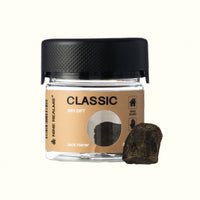
The problem is the sentence built on top of that chemistry. Every page telling you 9H-HHC occupies a legal grey area also sells 9H-HHC, and the law it is being vague about names stereoisomers in its opening paragraph. If potency and consistency are what you are after, our T9HC range was built for that. It comes with lab results you can read, and a legal position that does not depend on nobody checking.
9H-HHC is an unusual case. The chemistry it points at is sound, the problem it appears to solve is real, and the potency lottery in ordinary HHC deserved fixing years before anyone put a new name on it.
None of that changes what the law says. A purified fraction of a banned molecule is the banned molecule with better quality control. The German annex settled that in its preamble, before it described a single substance group, and it has been sitting there in plain German since 2024.
"The chemistry got better and the sentence about the law stayed the same, which tells you which half the marketing department wrote."
9H-HHC is a market term for a hexahydrocannabinol product, not a standardised chemical name. The most plausible reading is HHC enriched towards its (9R) epimer, the more active of the two forms produced when THC is hydrogenated. No vendor publishes a specification. The highest-ranking German page on the term concedes it is not clearly standardised.
Nobody has published a potency measurement for a 9H-HHC product. What is measured is the gap between HHC's two epimers. (9R)-HHC binds CB1 at 15 nM against 176 nM for (9S), and shows an EC50 of 3.4 nM against 57 nM. If a product is genuinely enriched for (9R), it would be stronger than typical HHC, but that is an inference from the epimer data rather than a tested claim.
No. HHC has been covered by the Neue-psychoaktive-Stoffe-Gesetz since 27 June 2024, and the annex's opening remarks state that the substance-group definitions include all stereoisomers of a covered substance. An HHC product enriched towards one epimer is a stereoisomer question, not a new-substance question. Manufacture, trade, and import are prohibited; possession and personal consumption are not criminalised.
Users describe effects close to ordinary HHC but steadier, which is what enrichment towards the active epimer would predict. It acts on the CB1 receptor, the same target as THC. There is no published human study on a 9H-HHC product, so every description of the experience currently available comes from people who bought it rather than from controlled research.
HHC is hydrogenated THC and arrives as a mixture of two epimers, only one of which is meaningfully active. 9H-HHC appears to be that same molecule enriched towards the active form, so the difference from HHC is ratio rather than a new structure. THC is the plant compound both are derived from, and it remains a controlled narcotic in Germany under separate law.
Very probably yes. HHC metabolises to HHC-COOH, which is structurally close to THC-COOH and cross-reacts with standard urine immunoassays for THC metabolites. Field data shows false positive rates for THC screening rising from under 2 per cent to over 10 per cent as HHC products spread. The result is analytically a false positive for THC, but it is still a positive screen.
Start below your usual HHC dose and wait before taking more. If 9H-HHC is enriched for the active epimer, it contains more of what does the work than the HHC you built your tolerance on. The amount you are used to is not a reliable guide. There is no published dosing research for this compound, avoid combining it with alcohol or other sedatives, and do not drive.
They are different compounds with different legal positions. 9H-HHC is a hexahydrocannabinol product covered by the German NpSG through the stereoisomer clause. T9HC is a distinct cannabinoid that Nine Realms sells with published per-batch lab results and a legal footing that does not rest on a definitional gap. The comparison comes up often enough that it is worth stating plainly.
Author: Jans Beloglazovs
Emerging from Europe's strict cannabis landscape, Jan has become a known figure in the European cannabis industry through vast experience in cannabusiness and a keen understanding of the shifting trends in Europe. Co-founding the Nine Realms cannabis brand, he leverages his expertise to advocate for progressive cannabis policies and educate a broad audience.


