
Discover OG Kush: A Complete Guide to Effects, THC, and Flavour
|
|
Time: 7 min


Product Finder
Find Your Nine Realms Match
Answer 5 quick questions to find your perfect cannabinoid product.
How familiar are you with cannabinoid products?
What kind of product are you looking for?
Where and how do you usually use cannabis?
What kind of effect are you looking for?
When should it kick in, and how long should it last?

Welcome to
Nine Realms
Our store is intended exclusively for people 18 years of age or older. Please confirm your age to continue.
By clicking here, you agree to our Terms and Conditions and Privacy Policy.
|
|
Time: 7 min
Walk into any dispensary and ask what built the menu. The honest answer is OG Kush. It sits in the family tree of half the strains you have ever smoked, quietly, like a grandparent nobody argues with. Breeders leaned on its genetics for decades. Smokers still ask for it by name. So here is the plain version: what it actually is, how it feels, how hard it tends to hit, and why that smell gives it away every single time. There is a modern, semi-synthetic stand-in covered near the end too, for anyone who simply cannot get the real thing.
Table of Content
TL;DR: OG Kush is a potent indica-dominant hybrid. THC around 20–26%, a piney lemon-diesel flavour, and a heavy, relaxing body high. Californian classic, and the genetic parent of a lot of what sits on shelves today. That is more or less the whole story.
OG Kush is a high-THC hybrid. It surfaced in California in the early 1990s, and the exact parentage still gets argued over in forums to this day. The version most people accept traces it to a Chemdawg plant crossed with a Hindu Kush landrace. That cross is where the fuel-and-earth backbone comes from, the thing your nose clocks before you have even lit it.
Then there is the name. Two stories, no winner. Some swear "OG" means "Ocean Grown", a nod to the coastal roots. Others will tell you it stands for "Original Gangster", slang that stuck as the strain moved through Los Angeles. Nobody can disprove either, so both survive. The mystery just became part of the pull.
The influence, though? Not up for debate. OG Kush is a parent or grandparent to Girl Scout Cookies, Headband, and a long list of others. Call a strain a "Cali classic" and this is usually the bloodline you are pointing at. Trace almost any famous West Coast hybrid back far enough and there it is, somewhere in the branches.
Timing helped. The strain landed just as American cannabis culture was growing up, shifting from back-garden plants to proper breeding programmes. Breeders saw the strength, smelled that loud terpene profile, and crossed it relentlessly. It stopped being a product and became a building block. Thirty years on, the name still runs through dispensary menus like a watermark.
The OG Kush effects land in two waves. First, a bright, heady lift. Talkative, even social. Then the body remembers it has weight. Limbs go heavy, shoulders drop, and the urge to do anything at all quietly packs up and leaves.
It is strong. New smokers underestimate it, every one of them, once. The arc runs from upbeat to deeply relaxed across an hour or so, which is exactly why people save it for evenings rather than a busy afternoon. It pairs with a sofa. Not a to-do list. Reported effects tend to break down like this:

A little goes further than you would think. Nobody is daring you to push it. Start low, wait, then judge from there.
This is also why it keeps such a loyal following among people who use cannabis to wind down once the day is done. That body-led calm, that appetite nudge. Exactly what they are after. None of this is medical advice, and effects shift from person to person, but the pattern is steady enough that OG Kush earned its evening reputation fair and square.
Indica-dominant hybrid. The split is not perfectly even, and the indica side leads, which is why the finish leaves you heavy-limbed and leaning toward the cushions. That early head-focused lift? Sativa genetics, having their say first. A sativa opening, an indica landing.
OG Kush is potent by any measure. Most lab tests put the THC content in the 20–26% range, and some phenotypes climb higher under ideal conditions. Firmly the strong category. Not the gentle one.
CBD sits very low, usually well under 1%. So this is a THC-forward strain, not a balanced one, and it offers almost none of the calming counterweight that higher-CBD varieties bring. What you get instead is a clear, pronounced high, driven start to finish by THC. After a mellow, CBD-rich session? Look elsewhere. This is not it.
One more thing worth flagging: potency moves between batches. Growing conditions, harvest timing, the cure, all of it nudges the final number. Two jars wearing the same OG Kush label can test several points apart, which is worth remembering before you measure your tolerance against what the sticker claims.
Attribute |
OG Kush |
Type |
Indica-dominant hybrid |
THC |
~20–26% |
CBD |
<1% |
Dominant terpenes |
Myrcene, limonene, caryophyllene |
Effects |
Relaxing, euphoric, heavy-bodied |
Flavour |
Pine, lemon, diesel, earth |
The flavour is the part people remember years later. Sharp pine hits first. Underneath, that fuel-like diesel note, the thing that hands OG Kush its unmistakable edge. A bright slice of lemon cuts across the middle, and damp earth rounds the whole thing off. Complicated for a plant. That complexity is exactly why it became a benchmark in the first place. The taste comes from its terpenes, each one tugging the flavour a different way:
Together they build the "lemon pledge over diesel" signature growers spend years chasing. The aroma mirrors the taste almost exactly. Open a jar of well-grown flower and the room fills with pine and fuel inside seconds. Loud, in the best way. Discreet it is not, so a sealed jar earns its keep if you would rather keep things to yourself.
That smell is also a quality tell. A flat, hay-like batch has usually been grown or cured badly, because the genetics should deliver that sharp pine-diesel punch every time. Dull nose? The terpenes are not where they belong, and the experience tends to follow them down. With this strain, your nose is the first honest test you have.
OG Kush has a reputation as a fussy grow, and the reputation is earned. The plant wants a warm, dry climate. It hates high humidity. It rewards anyone who keeps a careful eye on feeding. Flowering runs roughly 8–9 weeks indoors.
That fussiness is a big part of why quality swings so hard between batches. Grown well, OG Kush is exceptional. Grown carelessly, it sheds the sharp terpene profile that made it worth the bother to begin with. The genetics set a high ceiling. Only careful cultivation ever reaches it.
For shoppers, not just growers, that is the practical takeaway. Because the plant is demanding, the gap between a great batch and a forgettable one runs wider than it does with hardier strains. Two products under the same name can be worlds apart on smell, potency, and finish. So buy from someone who handles the genetics with care. This strain punishes shortcuts more than most.
OG Kush suits experienced smokers after a strong, body-led evening strain with a flavour that walks in and announces itself. A quick gauge of whether it is your sort of thing:
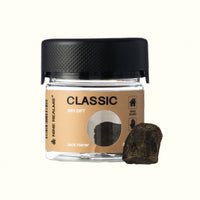
The potency and that couch-leaning finish reward a bit of experience. You can explore our OG Kush flower here. Want an OG-line strain with more weight behind it? Godfather OG from our SVART range sits at 40% T9HC, with a herbal, earthy nose.
Access is not equal everywhere, though, and that is the catch. In plenty of places legal cannabis flower is still out of reach, and growing your own simply is not on the table. For anyone stuck in that spot, semi-synthetic T9HC flower is one route worth knowing about.

It aims for a comparable experience inside a different legal framework, with just a hint of that familiar character. Not the same plant, and we would never pretend otherwise. But a practical option for people who genuinely cannot get the classic. Knowledge shapes every choice, and that includes knowing what alternatives are out there.
OG Kush earned its place at the centre of modern cannabis the hard way, by being unforgettable. The pine-and-diesel punch, the heavy evening calm, the genetics threaded through half the menu: it all adds up to a strain that still sets the standard thirty years on. Grown with care, it rewards you. And where the classic flower is out of reach, knowing your alternatives, T9HC included, keeps the choice in your hands rather than the law's.
"I think people need to be educated to the fact that marijuana is not a drug. Marijuana is an herb and a flower."
An indica-dominant hybrid. You get a short head-focused lift, then a heavy, relaxing body high that does most of the talking.
Usually around 20–26%, which puts it firmly in strong, THC-forward territory. CBD is very low, almost always under 1%.
Pine and lemon up front, a distinctive diesel-fuel note underneath, and an earthy finish. The aroma mirrors the flavour almost exactly, and a dull smell usually means the batch was grown or cured poorly. That loud profile, paired with genetics that underpin countless modern strains, is exactly why it has stuck around for thirty years.

Author: Jans Beloglazovs
Emerging from Europe's strict cannabis landscape, Jan has become a known figure in the European cannabis industry through vast experience in cannabusiness and a keen understanding of the shifting trends in Europe. Co-founding the Nine Realms cannabis brand, he leverages his expertise to advocate for progressive cannabis policies and educate a broad audience.

